
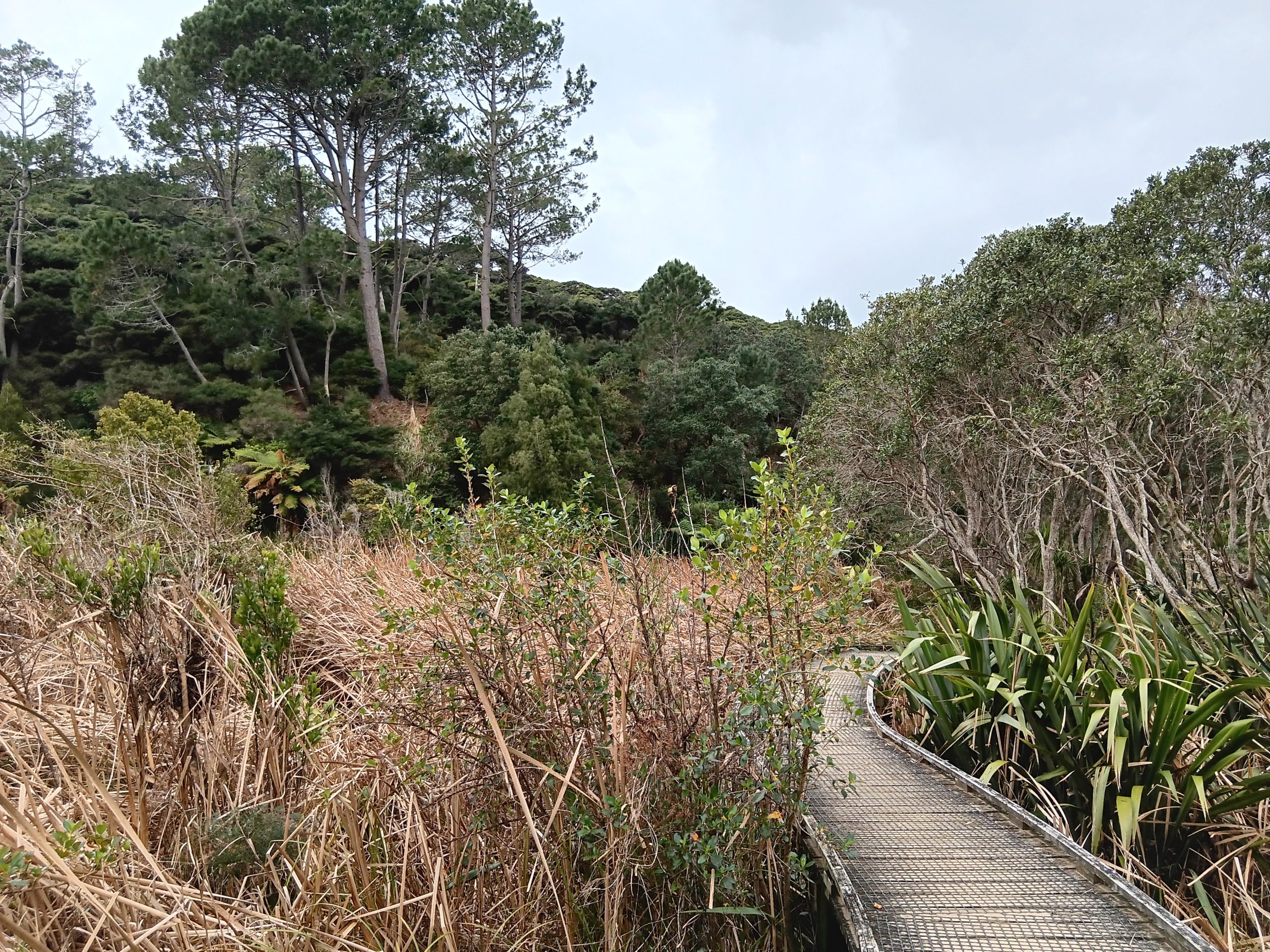
From lakes and parkland to kauri forest, coastal bush and wetlands – this headland is a haven for native wildlife. It’s the range of habitats in such an accessible area that makes this particular Kaipātiki reserve land area so appealing for locals, Aucklanders and tourists alike. An hour walk can take you from lakes to podocarp forest to coastal bush, beach and raupo wetland, all supporting a diverse range of endemic plant species.


Thanks to the restoration work of volunteers, and council track upgrades, the area has been relatively well-preserved, but as Auckland’s population intensifies and recreation needs increase, this park will need stronger enforcement, care and protection – perhaps increasing support Regional Parks network, iwi or extending a QEII National Trust covenant across all three reserves.


The headland acknowledged as a key sanctuary for marine and terrestrial birds on their flight path across the Hauraki Gulf – known as the North-West Wildlink.
Sixty species of birds have been officially identified as breeding or visiting on the wider headland. Details on this post 1
The freshwater lakes support Auckland’s largest urban pied shag colony and white-faced heron. Other small shag species, kingfishers, royal spoonbills, and swans visit on a regular basis. Kākā forage on the podocarp forest in winter. The Chatswood / Wawaroa streams are home to at-risk long fin eels and kōkopu.
The ecological benefits
This headland improves air quality for local and wider Auckland by helping absorb noise and sucrose from the sugar factory and pollution from Auckland’s roading networks.
The Challenges (or Opportunities)
Despite the ecological value of the flora, fauna, streams and lakes, they also function as stormwater ponds – filtering stormwater runoff from surrounding streets – and the extraction of water by the sugar factory in the refining process.
Managing such a precious resource and the impact of multiple outcomes requires a stronger commitment to sustainability and greater community awareness of the interconnectedness – Ki uta ki tai “from the mountains to the sea”.
In the future, a Regional Park research and education programme could explore practical, cost-efficient solutions for lake and forest health, climate change, coastal erosion.
Read our post on Volunteer Restoration.


- Bird species on the Kauri Pt headland (M. Galbraith, 2005, ed. P. Templeton 2026). ↩︎